
Coastal engineers understand the dynamic natural environment of the land and sea. Learn how ODU is developing experts who can help protect vulnerable infrastructure in coastal communities from erosion and sea-level rise.
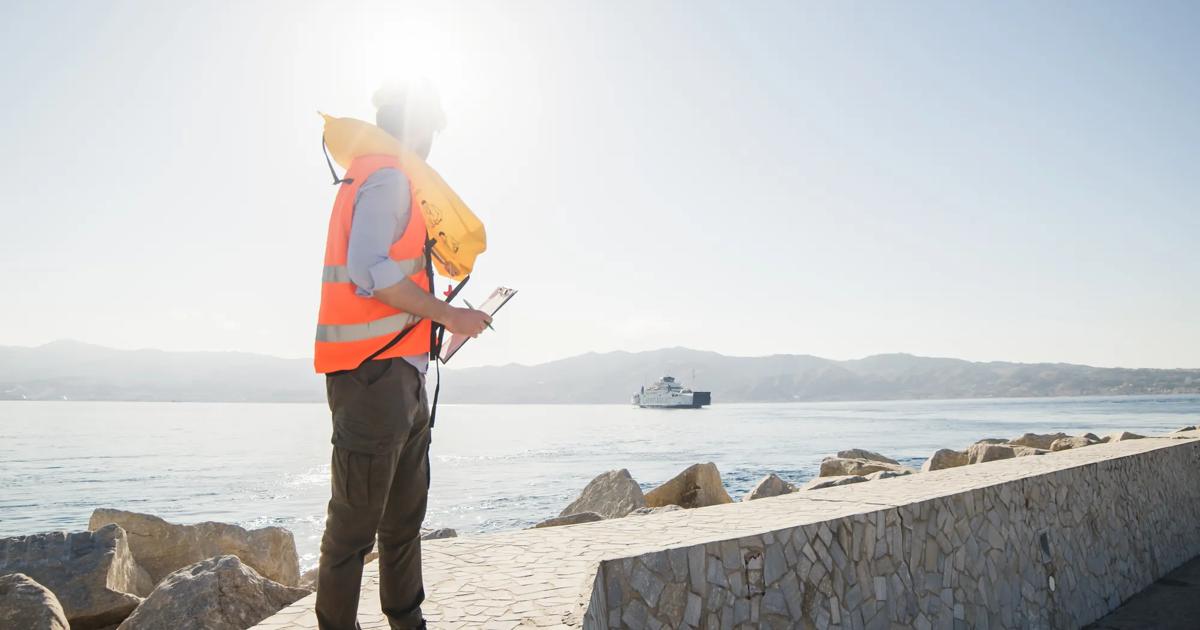
Coastal communities rely on vital infrastructure and natural systems. As they face erosion, their protection and development require complex engineering solutions. Coastal engineers lead the research and strategies that protect our coastal communities and environments.
Erosion, sea-level rise, and the vulnerability of infrastructure and natural habitats are among the unique engineering challenges our coasts face. Many coastal areas have invested in systems to replenish sand and sediment lost to erosion. That involves dredging and pumping sand to the shoreline to protect nearby buildings, roads, and wildlife like sea turtles and shorebirds that build nests in beach dunes.
How can coastal engineers help?
Coastal engineering is a multidisciplinary profession that overlaps with oceanography, marine geology, and other branches of engineering. In this profession, you’ll have opportunities to help design and construct ports and harbors, manage beach renourishment, and harness ocean energy.
ODU’s Coastal Engineering Institute conducts research on ocean surface waves, the dynamics of stratified flows, and the impact of sea-level rise on coastal processes. It’s also home to an online Coastal Engineering graduate certificate where ODU is developing coastal engineers with the expertise to build resilient coastlines for future generations.
What will you learn in a coastal engineering program?
At the heart of coastal engineering is understanding wave theory and erosion. We want to know how sediment moves and the different kinds of waves and currents that move it. Both master’s-level programs at ODU take a deep dive into dredges, hydrodynamics, and advanced alternative solutions for shore protection.
Take a closer look at the coastal engineering classes from the certificate program.
- Introduction to Coastal Engineering
Meet coastal structures as you explore classical small amplitude wave theory, including wave transformations in shallow water, shoaling, refraction, diffraction, reflection, and breaking. This class covers currents and sediment transport processes, along with alternatives to mitigate coastal erosion.
- Dredging and Beach Engineering
Discover the different types of dredges and what affects their performance, from hydraulic (cutter or hopper) to mechanical dredge systems (bucket, clamshell, etc.). You’ll also learn about how quickly sediment accumulates, how systems can be built to relocate sand, and how to design ways to renourish beaches.
- Coastal Hydrodynamics and Sediment Processes
Study coastal hydrodynamics, including waves, low-frequency motions, and coastal responses. You’ll see how understanding sediment processes and beach evolution can inform your work as a coastal engineer. Advanced topics in this class include linear wave theory, nonlinear waves, wave dissipation mechanisms, fluid-sediment interaction, sediment concentration and transport models, and beach morphology.
- Design of Coastal Structures
Learn the design philosophies around coastal structures, the costs of construction and maintenance, the methods for optimizing design, and advanced alternative solutions for shore protection.
Why does ODU’s location matter for online coastal engineering programs?
Old Dominion University’s proximity to the ocean fosters coastal engineering activities and research, making us a leader in this unique area of study. Our location allows us to take field measurements using a nearshore, directional wave gauge at Virginia Beach in the Atlantic Ocean. ODU’s Coastal Engineering Institute is also equipped with a two-dimensional random wave basin, a wave maker control, and a data acquisition and storage system.
As an online student, you’ll have access to faculty leading the field with research and expertise. They are also connected to a region where challenges like erosion and environmental changes are highly relevant. Even in distance learning, you’ll be part of an active community of coastal engineering professionals.
What is the ODUGlobal difference?
With accelerated eight-week courses and no in-person meeting requirements, ODU’s online coastal engineering graduate certificate program is a flexible way to grow your knowledge and qualifications without putting your career on hold. The graduate certificate is 12 credit hours and can be completed in just two semesters or at a pace that works for you.
Build advanced expertise for resilient coastlines around the globe with a high-quality graduate certificate offered online through ODUGlobal.