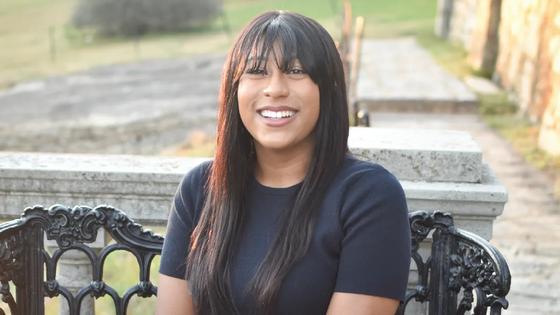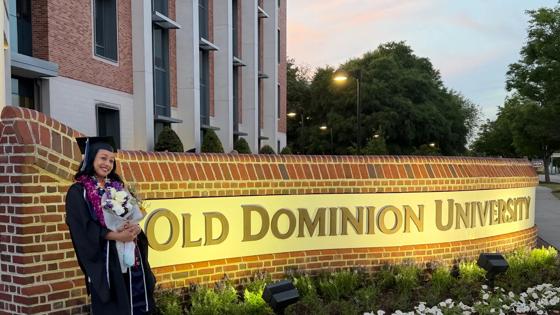
Amanda Karls' doctoral research on sustainability in higher education grew directly from her work building a grant-funded food forest on her campus, a 3-acre living laboratory open to students and the surrounding community.
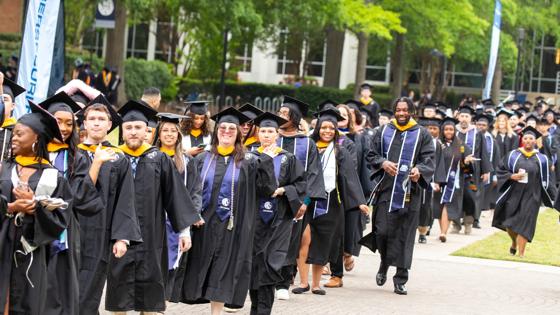
Amanda Karls ’26 has spent her career navigating the systems that make higher education work: accreditation, policy, faculty governance and program assessment.
But the project she’s most proud of sits on three acres behind a health services building in Spartanburg, South Carolina, where nothing used to grow but grass.
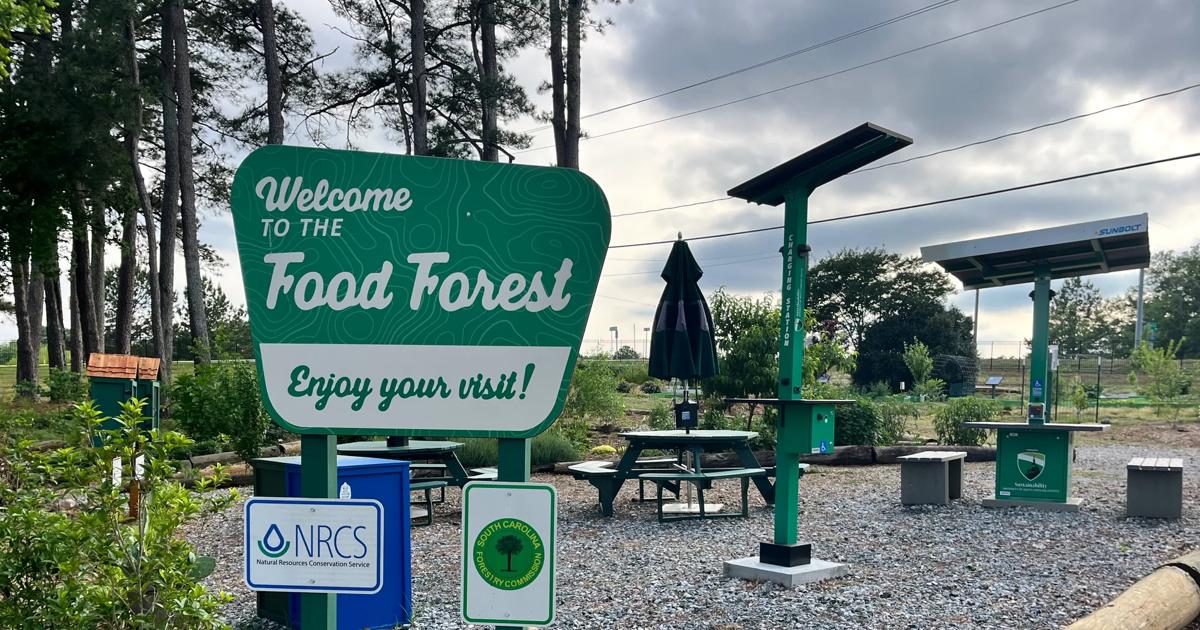
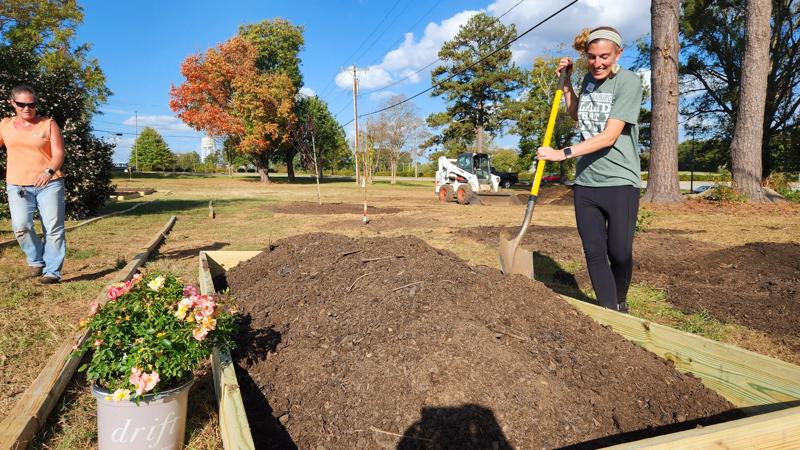
Karls, who completes her PhD in Public Administration and Policy through ODUGlobal in May 2026, built a food forest at the University of South Carolina Upstate largely from scratch and mostly through grant funding she wrote herself. What was once a weekly lawn-mowing obligation is now home to more than 500 plants across seven layers: root vegetables, ground cover, shrubs, vines, dwarf fruit trees, full-size trees, and a canopy of nut trees. Strawberries grow beneath blueberry bushes. Kiwis and grapes climb trellises. Pecans, chestnuts and hazelnuts anchor the canopy. The whole thing is open to anyone—students, faculty, community members—to harvest freely, no questions asked.
“It brings me a lot of pride to have a place on campus where sustainability isn’t a concept or a debate. It’s just there,” Karls said. “It’s an opportunity for our community to see that we’re committed to more than just what happens in the classroom.”
Karls funded the entire project through competitive grants, six in four years, without drawing on university resources. The first came from the South Carolina Forestry Commission, which required the project to be a true food forest rather than a conventional community garden. That distinction sent Karls deep into research from the United Kingdom, where layered food forests are far better documented than in the United States. She built the plant list from European sources, mapped it to South Carolina’s growing zone and submitted the grant, hoping she’d gotten it right.
She did, and the results surprised her. Students who might never have thought about where food comes from ask why blueberries aren’t available year-round, or reminisce about picking tomatoes in their grandparents’ gardens. There’s a free seed library on site, solar tables where students can study outdoors, and a pollinator habitat.
“I wasn’t expecting it,” Karls said of the conversations the forest has generated. “But now I expect those things.”
The food forest also gave Karls something else: a dissertation. Her doctoral research focuses on sustainability in higher education, specifically how institutions like USC Upstate, with limited resources and competing priorities, can build and sustain a culture of environmental awareness. The food forest is both the inspiration and the living proof of concept.
“Those experiences—planting a tree, coming back and harvesting the peas or the beans, eating a pepper fresh from a plant—that excitement in a learning environment is what brings me the most joy,” she said.
Translating that excitement into lasting institutional change, she discovered, requires policy. And policy is what has lined her path from the beginning.
Karls entered higher education after studying legal studies and social welfare at the University of Wisconsin, convinced she wanted to be a juvenile probation officer. She discovered that the path didn’t fit her after an internship. Graduate school in educational policy at the University of Kentucky redirected her toward higher education, where she discovered a passion for the policy architecture that shapes student experience from the inside out. Academic advising at Indiana University and directing orientation and outreach at the University of Utah continued a career spanning several state flagship public institutions.
When she arrived at USC Upstate, the scale was different, but the instincts were the same. She wanted to build something in sustainability, and she knew from experience that the fastest path to institutional change runs through policy.
“The best way to get things done is if there’s a policy for it,” she said. “You get buy-in with leadership a lot quicker.”
That insight pointed her toward public administration rather than another educational policy degree. The sustainability work she’d been doing required building networks outside of higher education with nonprofits, businesses and government. ODU’s program offered the right combination: a public policy framework broad enough to span those sectors, with room to pursue a dissertation squarely inside higher ed.
Karls’ actual day job is director of institutional effectiveness and compliance, a role that puts her at the center of accreditation, program governance, and the constant data requests from state and federal oversight bodies.
The PhD, she said, is about earning the credibility to do that work at the highest level.
“Working amongst faculty, it gives you just a little bit more credibility that you’ve done your work and due diligence to be the top professional in your area of the higher ed world,” she said.
For Karls, the degree, the dissertation, and the food forest are all part of the same project: figuring out how to make sustainability possible and permanent at a state university.